Welcome to my blog, I'll be using it over the next year for my A2 Media Studies coursework. I will be posting a variety of information, photos, videos, presentations, texts and posts to contribute towards it.
Scene fifteen will be the passing of time which I was depict by filming a clock moving- this will then be sped up in editing.
Scene sixteen is the character dying where I want to show them in heaven and going back through the tunnel the first came out of in the first scene.
The death is scene seventeen. Here I want to use a shot in the character's perspective of their eyes closing. The last shot will be the character stood in bright light to depict heaven.
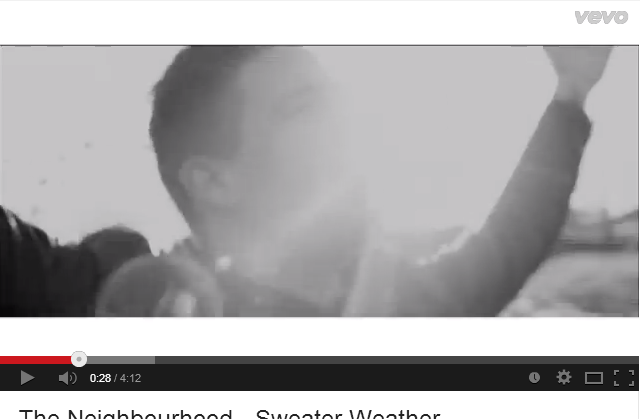
I recently watched The Neighbourhood's music video for the track 'Sweater Weather'. I loved their use of black in white to take me back to the bygone era in which the video is set. I have also chosen to edit mine in black and white.
I also like a lot of their shots and want to incorporate them into mine. For example at clock at 0.25. I thought I could use this to reflect the time of life being precious and constantly running out.
I also liked a shot of the sun glare. I thought I could use this kind of shot in my opening to depict the brightness of coming into the world from orignially being in the womb.
The blurred lights, I can use to show the development of senses- in particular eye sight in the third scene.
The last shot I really liked was towards the end. At this point there is an overylay of three different shots which are upside down. I thought I could use this kind of editing in my university scene to show the two sides of university (both patying and learning). I will also distort the imagery and add new layers which will make it more exciting.
As you have probably noticed the storyboards for each scene are quite short. However, at this stage my storyboards are more a plan and a brief overview of the shots and shot order I want. I am sure I will change it in filming! I also have lots of short scenes but I felt these were essential in portraying the character's life.
Scene ten will start with the character on a computer, depicting they are at a boring office. It will then progress to them looking at job advertisements in the newspaper, implying they are looking for a new career and pathway.
Scene eleven will hopefully be a time lapse where I can show the progression of time. I want to film footage of clouds or a sunrise but sped up to represent this.
Scene twelve is when the character will fall in love. I want to use stop-frame animation in this and show two puzzle pieces coming together. This will lead onto their marriage in scene thirteen.
After that I hope to depict my character having children, in scene fourteen. I, again, am hoping to use stop frame animation and show the character (represented with big books) and their children either side (represented with small books).
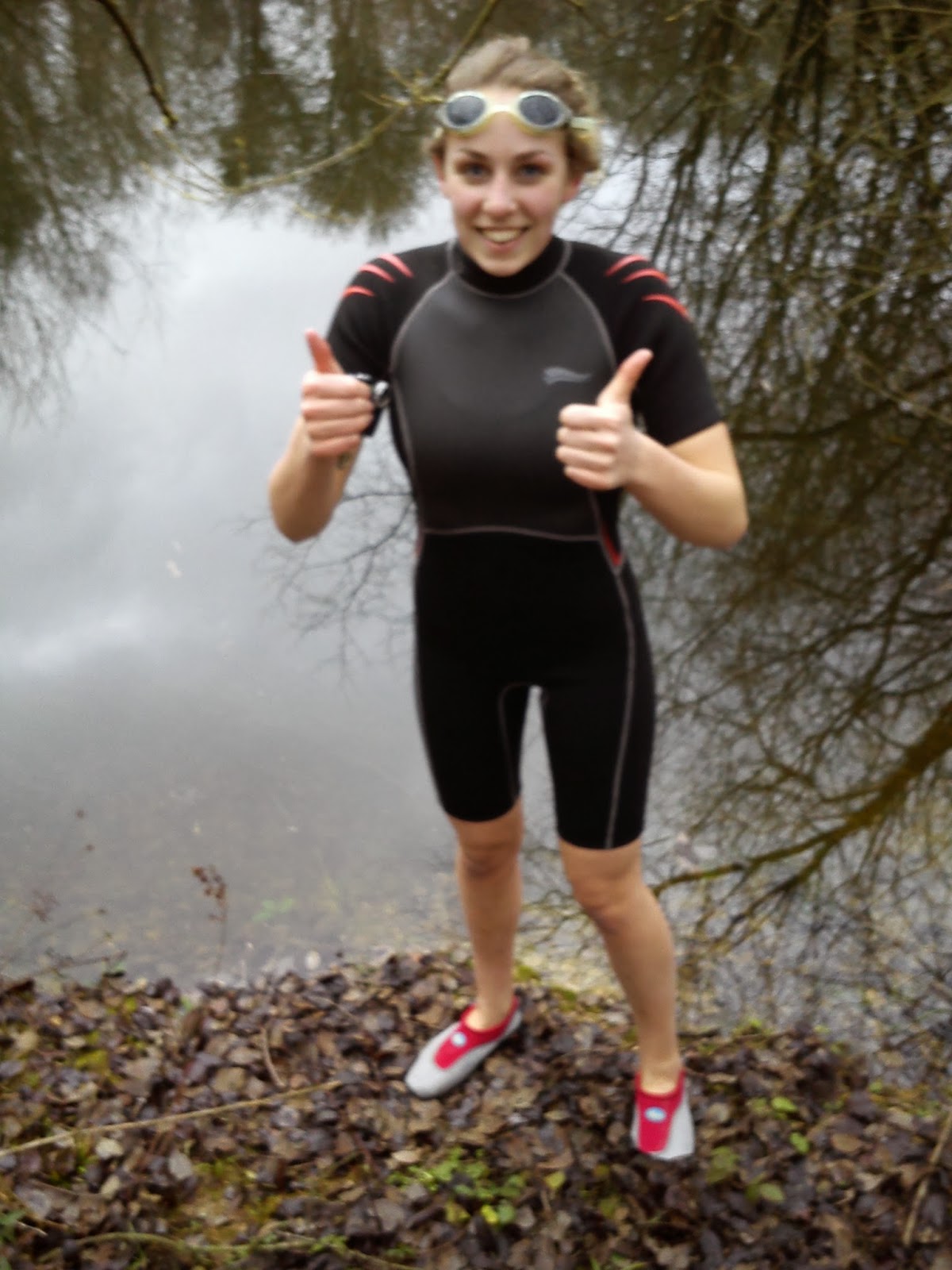
I’ve now got all my underwater shots for my first scene of
the birth. Unfortunately filming was cut short after dropping the camera and it
being so cold! However, I’ve got all the shots I need. When editing I realised
how short the duration is in the first scene when combined with the tunnel so I
can’t use a lot of my footage and get in all the frames I intended but so far I
am happy with how the scene looks. I made my shots fairly unsteady showing the
movement of water with sunbeams also showing. This is to reiterate being inside
the womb and the light showing life. An example of one of my underwater shots
is below.
Inspiration for these shots came from Caggie Dunlop's video 'Neverland' which I researched prior to making my video. View the video here: http://www.youtube.com/watch?v=8gdm4UfHDR4
Scenes eight and nine are all about teen life being more enjoyable. Scene eight I want to show my character at a party, using possibly strobe or blurred lights. I then want to follow this into scene nine which will represent university. In this scene I want to cross cut between books and a party to show the two main sides of university!
Scene five is a very short scene where I want to use stop-frame animation of books to show my character growing and learning. Scene six then follows onto the discovery of yourself and trying to find who you are. In this scene I want to film along a pathway to show this. After that is scene seven which is teen life when you are a bit lost. I am planning on filming in a forest and field for this scene to show the character is alone and lost.
“My Brother The Devil” is a British urban drama written and directed by Sally El Hosaini. The film is set among council estates in Hackney, East London and centred on two teenage British Arab brothers exploring male gang culture. The film is based around drugs, homosexuality, gang culture and family. There are two male protagonists in the film, Rashid, played by James Floyd, the older brother and Mo, played by Fady Elsayed.
Both brothers are very close throughout the film. At the start we see Mo on his last day of school and receiving his GCSE results which he does very well in which is juxtaposed with Rash who is unemployed boxing depicting an alpha make persona. Rash is supportive and proud of Mo’s results.
Rashid (also known as Rash)initially appears to be ‘the devil’ the films tittle is referring to, he is part of a gang DMG (Drugs Money Guns). He shares very similar tastes in music, clothing and language as his friends. Dick Hebdige suggests that youth form subcultures. These are a group of like-minded individuals who feel neglected from societal standards and who develop a sense of identity differed from the hegemony. Hebdige also goes on to say that young people construct identity through fashion, music and language. This is very supported by Rash and his gang. Rash spends the start of the film being a drug dealer thinking dealing is better than having an actual job. He longs for money and material goods; he says how wants to be rich to “make sure Mo goes to college”. It is clear he is kind hearted and has a close relationship to his family but caught up in a bad group. He changes himself dependant on who he is with (his mother, his gang, his rival gang or Mo). Tajfel and Turner social identity theory suggests that we change our “level of self” dependant on our social contexts. That explains how Rash can be so loving to his mother and yet so aggressive to his rivalry gang ‘Demon’.
We do not see a change in Rash until his best friend Izzi is stabbed. To start with he is angry and prepared to shoot Izzi’s killer but then he finds a new social identity with Sayyid, a photographer that Izzi and him dealt for. Sayyid offers him work outside gang life and a bridge to middle class life. As his friendship develops with Sayyid into a relationship he begins to see life away from gangs and tries to leave DMG.There is one scene in the film where Sayyid takes Rashid to central London and Rash tells him how all his life of living in London he had never been there. This illustrates how trapped he was and it isn’t until he finds someone from outside his gang that he can escape.Henry Jenkins came up with the term collective identity. He believed “We need to interact in order to form our identity… When we interact out own identity is influenced by other people.” Rash interacting with Sayyid has influenced his identity and makes him into a better person.
Mo does the opposite to Rash. Mo starts off well, coming out of school with good GCSEs and the possibility to go to college or get a good job. However, he idolises his brother and is keen to follow him and join DMG. Mo is a very naïve and immature character. Rash is always very insistent on him staying away from the gang culture. He is treated as a child and constantly being called “young bud”, “kid” and “cute”. The idolisation of an older brother is similar to Ricky and Curtis’ relationship in “Bullet Boy”. As the film continues and Rash distances himself from the gang Mo seizes the opportunity to join, knowing his brother wouldn’t allow it. David Gaunlett says “identities are not ‘given’ but are constructed and negotiated”, this is very much the case with Mo. The two brothers come from a good family, they construct their gang cultures. Mo has the potential to go further.
The film does not over simplify the reasons to why the boys are involved in drugs and yet we are still sympathetic of the characters. Both brothers are portrayed negatively and positively. Although the gang culture, drugs, sex, drinking are all stereotypical representations of youth, the rejection and breaking free of gangs subverts this.