Thursday, 6 February 2014

Visit to the BFI

On Wednesday 5th February my class visited the BFI (British Film Institution) in London for a study day on youth, media and collective identity. The workshop was run by Matthew Hall, Head of Film and Media Studies at Seven Kings High School.

The day started with information on collective identity. Firstly we looked at Jacques Lacan, a psychoanalyst (not a media theorist) who proposed the mirror stage in a child. This is when a child begins to develop their identity (recognising self in the mirror). This is symbolic of the bigger stage of development by looking for people who reflect back at you. It is believed that this is done to find identification and aspiration.
This is influenced by the media as we again use TV/film as a ‘mirror’ to reinforce our identity. However, media portrayals can sometimes be inaccurate. Stuart Hall believed that we accept, negotiate or interpret influences. It depends on the audience interpretation. Hall continued to propose his ideas on ‘encoding/decoding. This theory is about how media messages are produces, circulated and consumed. The message is not transparent or passive.
Henry Jenkins came up with the term collective identity. He believed be collect our identity through interacting (social events) and media. “We need to interact in order to form our identity… When we interact out own identity is influenced by other people. Or…we may interact with (and be influenced by) media representations”. 
We then learnt about the history of ‘Youth Culture’. ‘Youth Culture’ initially started in the 19th Century with the “Bowery Boys” also known as “Soaplocks”. They were recognisable youth and used their own slang/language, dressed differently and washed their hair. Youth then changed from the 1900-1940, the industrial revolution had forced children to become adults, working in factories where they felt like prisoners. However, when laws started to come into place about child labour and slavery the children were free hence why more education was put into place. Although this was a very positive transition magazines also began to target the insecurities of teen girls.
1950s/60s was the ‘birth of the teen’. Teens had economic potential and were called the “market of the future”. Along with this the first negative stereotypes of teens arose. For example “The Wild One”, in this Marlon Brando, playing Johnny Strabler, leads a group of bikers. The film features fighting, drunken youth, relationships and rebellion from conformity along with conformity to a gang and the subculture of ‘bikers’. The 1950s gave us the rock ’n’ roll culture, where the ‘generation gap’ became particularly apparent. Teens were happy not to fit in and rebel. Traditional values and hegemony were challenged. This is explored in “Rebel Without a Cause” a 1955 drama where James Dean plays an emotionally confused, suburban, middle-class teenager. This was one of the first films where the delinquent was not from a urban slum, there was no reasoning for his behaviour other that confusion, which the audience could emphasise with.

The 1960s and 70s took another turn, the next generation of teens were very cynical about commercial exploitation of youth. Young people began to support civil rights and now had a cause. For example: “Easy Rider”. There was multiplicity of youth culture. The term ‘Youth Culture’ (created by media industries) was no longer monolithic and single but was manifold and altered to ‘Youth Tribes’ to fit into these new formed ‘subcultures’.

From the 1920s to late 60s Hollywood was governed by Hays Code, family films had no sex, violence, delinquency and questioning of authority, therefore, nothing to appeal to teens. When this broke down in the 60s, the media dared to depict issues to appeal to a young audience, teens could appropriate these depictions as these were the closest to an accurate representation. “Kidulthood” is an example of exploitation cinema. The writer and star Noel Clark collected newspaper headlines to create his script. This new exploitation cinema began to reflect and explore the lifestyles of youth subcultures to attract a young audience and exploit mainstream adult fear. “Quadrophenia” is another example of this with portrayal and conformity to two subcultures (Mods and Rockers). Throughout these films there is an underlying theme of adults not understanding and teens trying to be different. “Human Traffic” is a good example of this a 1999 film based around clubs and drugs.


We also learnt about ‘kitchen sink’ during the 1950s and 60s, the idea of social realism and frustration at traditional British culture. Class, sex, allure or crimes and conformity played a significant part. Films such as “Billy Liar” and “A Taste of Honey” are examples of ‘kitchen sink’ dramas.

The ‘Blaxpoitation’ was quite the opposite. These were based around urban youth dramas, generally in inner city locations, based around poverty, amoral characters, the temptation of crime/gangs, drugs, sex and frustration of racism.
We then watched "My Brother, The Devil".

(See next post)

Tuesday, 4 February 2014

Storyboarding - Scene Two, Three and Four

Scenes two, three and four are fairly shorts scenes that all link together. Scene two begins with the chaos of the word when you are first born (which I have depicted by filming on a busy street). Scene three and four are all about your senses, three focusses on sight so I want imagery of eyes and blurred lights, whereas scene four mainly focuses on touch and the exploration of objects.


Sunday, 2 February 2014

Storyboarding - Scene One

Here is my draft storyboard for the first scene. This scene will be representative of being born so I want to cross cut footage from underwater (symbolic of the womb) and shots of the sun/a tunnel (depicting the birth).

Monday, 20 January 2014

Puzzle Pieces

I am also using puzzle pieces to symbolically depict my character and their partner finding one another and being the perfect match. I will edit the shots of the puzzles with stop-frame animation. I am using plain puzzle pieces that fit together perfectly. The two pieces will come together join and then go off the shot as one.


Sunday, 19 January 2014

Cards

I am using cards to show my characters children, using stop frame animation. I am using a stack of books central which will represent my character as a grown and knowledgeable adult and two stacks of cards which will come out of the books. I am then planning to stack these to show the children growing up. Originally I wanted to show the children using small books but I found a lot of small books were too thin or different shapes so didn't have the effect I wanted.

Friday, 17 January 2014

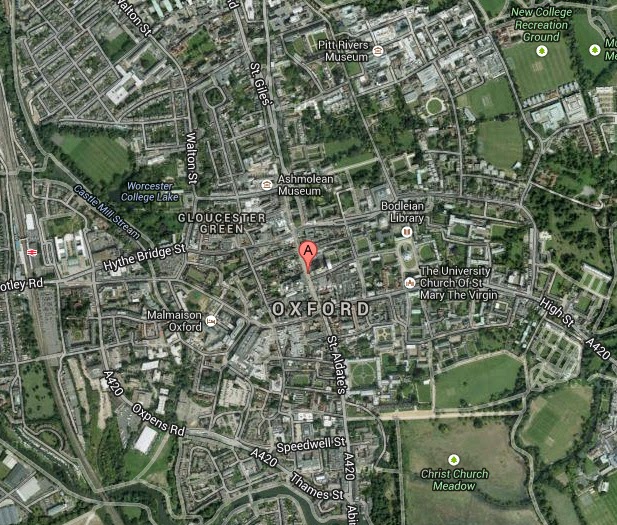
Location - Oxford

I used the busy streets of Oxford for some of my filming. I chose to use Cornmarket Street because living in Oxford I've learnt this is one of the busier streets due to it being central Oxford with lots of shops on.

I used the shots I got to portray how the character felt when they first approached the world. Initially the world must feel busy and fast so I wanted to make the audience feel this.

A lot of the time the street wasn't busier enough and people avoided the camera so I didn't get that much footage when it was as busy as I hoped.

Here are the shots I got in Oxford: